메모리 계층
pccx v002 메모리 서브시스템은 4단계 계층 구조다: host DDR4 → Weight Buffer / L2 캐시 → L1 / Constant Cache → 각 PE 내부 레지스터. 각 레벨은 다음 레벨의 대역폭에 맞춰 크기가 정해져 있어 연산 코어의 데이터 기아를 막는다.
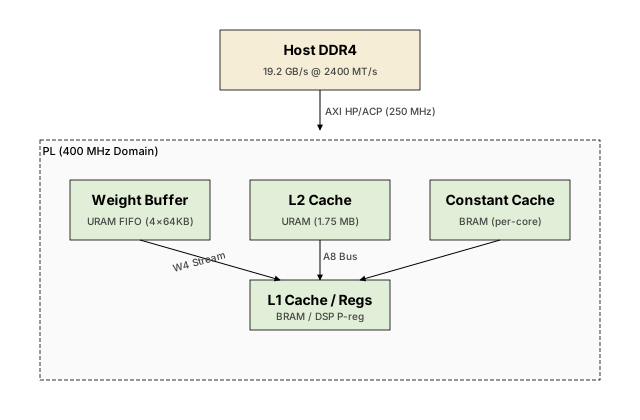
그림 6 pccx v002 메모리 계층 및 인터커넥트 구조. 가중치와 활성값은 host DDR4에서 URAM 기반 L2와 Weight Buffer를 거쳐 연산 전용 BRAM 캐시로 전달된다.
1. 계층
레벨 |
저장체계 |
용량 (KV260) |
최대 대역폭 |
목적 |
|---|---|---|---|---|
L0 Register |
FF |
Inside DSP48E2 |
48 bit / clk / DSP |
누산기 |
L1 Cache |
BRAM |
A few KB per core |
32 element / clk |
GEMV 활성값 / 결과 임시저장 |
Constant Cache |
BRAM |
A few KB per core |
16 bit × N / clk |
ISA shape/size 포인터, 스케일 팩터 |
L2 Cache |
URAM |
1.75 MB (114,688 × 128-bit; ~50 of 64 URAM) |
256 bit × 2 / clk (both slices) |
활성값, KV-cache, 중간 결과 |
Weight Buffer |
URAM (FIFO) |
4 × 64 KB (4 HP ports, 4096 deep each) |
128 bit/clk per HP port @ 250 MHz |
INT4 가중치 스트림 |
Host DDR4 |
External DRAM |
4 × 512 Mb × 16-bit |
19.2 GB/s |
모델 가중치, 입력, 토큰 출력 |
2. 대역폭 정합
2.1 가중치 경로
목표: HP 포트가 매 사이클마다 GEMM systolic array에 필요한 가중치 대역폭을 충분히 제공해야 한다.
Systolic array: 32 × 32 = 1,024 DSP(400 MHz, 1개의 그리드, 16행에서 두 개의 32 × 16 서브체인으로 분기).
W4A8 듀얼 채널 패킹에서는 1 DSP = 2 MAC이므로, 2,048 MAC/clk이 된다.
가중치 요구량: 2,048 × 4 bit = 8,192 bit/clk @ 400 MHz.
공급량: HP0 + HP1은 2 × 128 bit/clk @ 250 MHz(총 64 Gbit/s raw)를 제공하며, CDC FIFO 하류에서 ~160 bit/clk @ 400 MHz로 정규화된다.
격차는 가중치 재사용(Weight Stationary)으로 해소한다. GEMM systolic array는 가중치를 한 번 로드한 뒤 수백~수천 사이클 동안 재사용하고, Weight Buffer는 미리 패치(prefetch)만 수행한다. 정확한 재사용 패턴은 GEMM 코어 (시스톨릭 어레이) 를 참고한다.
2.2 활성값 경로
목표: L2 캐시가 GEMM, GEMV, SFU에서 동시성으로 발생하는 활성값 읽기 요청을 만족해야 한다.
L2 캐시 포트: 듀얼 포트 URAM — Port A는 ACP DMA, Port B는 NPU 연산이며, 두 포트 모두 1클럭당 128-bit 폭을 가진다.
GEMV 코어의 피크 활성값 요구량: 4개 코어 × 클럭당 32 INT8 요소 = 총 128 INT8 요소/클럭이다. 하나의 128-bit URAM 읽기는 한 번에 16개 INT8 요소를 공급하므로 GEMV 브로드캐스트 경로(동일 활성값이 네 코어에 공유)는 한 포트 안에 수용된다.
2.3 Host ↔ Device 경로
목표: 사전 채움(prefill) 시 모델 가중치를 로드하고 디코딩 시 KV-cache 업데이트와 토큰 출력을 처리한다.
AXI ACP 포트를 통해 DMA를 수행한다. 상한은 host DDR4의 19.2 GB/s이다.
v002.1 처리량 목표(로드맵 기준 약 20 tokens/s)에서는 host ↔ device 트래픽의 대부분이 KV-cache 업데이트와 새 토큰 쓰기로 구성되므로 예산 내에서 수용 가능하다.
3. 캐시 운용 정책
3.1 L2 캐시: 중앙 공유 스크래치패드
L2 캐시는 소프트웨어 관리 스크래치패드로 동작한다. 전용 하드웨어 교체
정책은 없다. 주소는 명령어 스트림에서 직접 지정한다
(MEMCPY dest_addr, GEMM src_addr).
1.75 MB인 L2는 8개 듀얼 포트 URAM bank로 분할되어 다중 코어 동시 접근을 지원한다.
장점:
지연시간이 예측 가능하다(태그 매칭이나 miss 핸들링 없음).
컴파일러가 데이터를 정적 레이아웃으로 배치해 인터커넥트 경합을 회피할 수 있다.
3.2 Constant Cache: ISA 포인터 백엔딩 스토어
ISA는 6비트 shape_ptr_addr 와 size_ptr_addr 필드를 통해
shape/size 메타데이터를 참조한다. 이 포인터는 Constant Cache의 64개
엔트리를 가리키며 MEMSET으로 사전 로드된다. 인코딩 규칙은
명령어 상세 인코딩 를 참고한다.
3.3 Weight Buffer: 스트리밍 FIFO
Weight Buffer는 HP 포트 프리패치와 코어 소비 사이 타이밍 오차를 흡수하는 원형 FIFO로 구현된다. bank-level interleaving을 통해 GEMM의 Weight Stationary 재사용과 GEMV의 Weight Streaming 패턴을 모두 처리한다.
4. 데이터 병목 완화
파이프라인 정지를 피하려면 전체 경로에서 더블 버퍼링을 사용한다.
GEMM 활성값: L2와 PE 사이에서 ping-pong 버퍼.
GEMV 활성값: L1 캐시를 bank별로 분할해 읽기와 쓰기를 병렬 진행.
가중치: Weight Buffer 내부의 ping-pong FIFO.
이 설계는 이상적인 조건에서 각 연산 코어의 100% 이용률을 목표로 한다. 실측 이용률은 합성 결과가 확보되면 구현 섹션 문서에 보고한다.